Use case diagram
Use case diagrams are used as part of an object-oriented requirements analysis to describe the use cases to be analyzed and the actors involved.
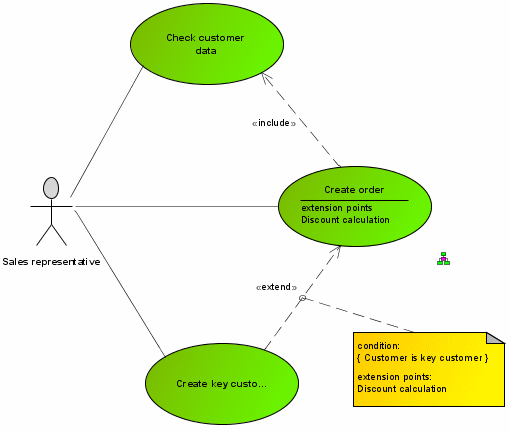
Figure 17 shows a Use case diagram with one actor and three use cases. Actors are people, roles, or systems that interact with the system to be analyzed. A use case represents a self-contained functionality that can be invoked from outside the system and leads to a particular result.
The relationships between the actor and the use cases are associations. In Use case diagrams, these are normally shown without annotations such as names or multiplicities.
A relationship of the Include type runs between the Create order and Check customer data use cases. This means that the Create order use case includes the Check customer data use case, that is, when creating an order the customer data is checked.
The Create order use case defines an extension point called Rebate calculation. An extension point indicates a particular point in the internal process of the use case at which additional functionality can be added to the process. In this example, this is the calculation of a rebate.
The Extend relationship between the Create key customer order and Create order use cases states that the Create key customer use case supplements the Create order use case with this functionality at its Rebate calculation extension point, in this case by calculating a special key customer rebate. In addition, the Extend relationship includes a specification of the condition under which the extension is permitted, namely that the customer must be a key customer.
Typically, the internal process of the use cases would be described using behavior diagrams, for example the two Activity diagrams in Figure 15 and Figure 16.